
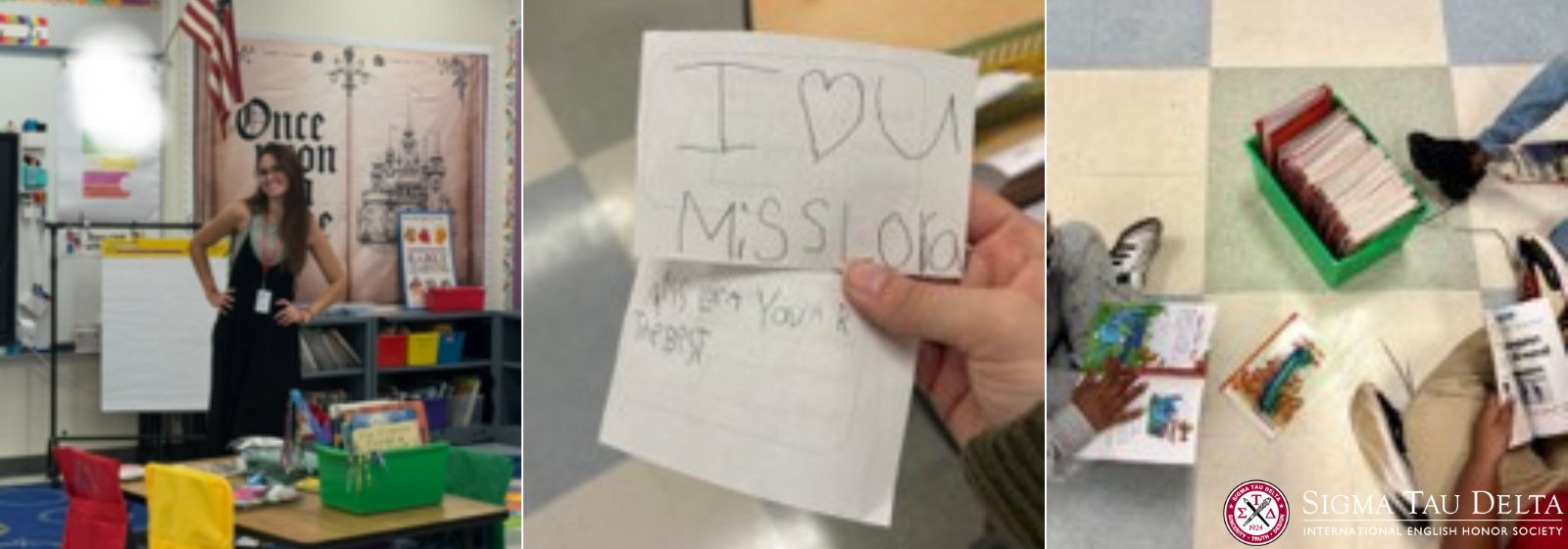
Since deciding to study English, like many others, I have been asked innumerable times, so what are you going to do with an English degree? In an age of digital and oversaturated media, it’s become a reflexive question, but I always thought it was an ignorant one. I have never been asked this question by a person that could not read, write, or comprehend what they were reading or writing. I have, however, only ever been asked this question by people with little knowledge of the real and growing threat of illiteracy among underserved and impoverished communities. As the conditions of these communities and careers in education worsen, the demand for masterful and passionate English scholars in Title 1 and otherwise vulnerable schools only grows. There lies the necessity for Deltans—leaders in the English community—in service of underprivileged and overlooked futures; this is how I came to committing two years to teaching reading and writing at a Title 1, Transformation school.
In the briefest of overviews, a Title 1 school is one in which seventy percent or more of the student body receives government funded free and reduced lunch. Separate from this, in my school district, a Transformation school is one who qualifies for extra district assistance (grants, additional staff and faculty, tailored support, etc.) due to chronic challenges and underperformance. Our Transformation Network currently supports 23 elementary schools out of our (astounding; my district is the seventh largest in the country) 204. That means eleven percent of the district’s elementary schools have been and are currently receiving failing school grades. My specific school has been graded a D or an F since it opened, which means there are multiple generations of people in my community that received the entirety of their elementary education from a failing, underfunded, understaffed institution. This is not simply a rising issue; it’s a historic one, and one that is extremely difficult to overcome. While this year’s numbers are still in the works, it’s worth noting that in the six years since the Transformation Network was created, only eight schools in the district have successfully exited the program.
As a first-grade teacher, I have met ten-year-olds who cannot read, seven-year-olds who don’t know their letter sounds, and six-year-olds who don’t know their names. You can imagine that these students detest English class. All these skills I’ve mentioned—decoding, encoding, comprehension—have been inaccessible, challenging, and boring to them. I was asked why are we learning this? so many times during my first few months of teaching that I made it part of our whole group routine for my students to ask in unison. I tell the group that we are reading to learn about firefighters, animals, or maps; that we’re writing letters to Santa, or Mom, or their best friends. In private, when they need it, I tell one student that he’s learning to read so that he can read the play sheet when he’s a college football player. I tell another that she is learning to write so that she can write reports when she becomes a police officer. I tell another that she’ll have to do a lot of reading in veterinary school.
These students deserve teachers who see teaching English as a means of understanding the world, functioning inside it, creating and consuming art. As a member of Sigma Tau Delta, I’ve seen the ways people come together for book club and convention, for workshops and seminars. I’ve seen the joy, connection, and opportunities their skill and love for literacy have brought them, and I can’t help but lament that my students deserve to experience that.
I wish I could say that I have a real passion for primary English education. I don’t. It’s a passion for scholarship and a drive for community service and fellowship that led me down the scenic route in my English career. Now, I’m bringing this issue to Sigma Tau Delta to say that if you’re stuck in-between—between under and post grad, between career opportunities, whatever the case—consider lending some of your time to the underserved communities around the country. Fellowships and programs like Teach for America, Urban Teachers, City Year, and so many others are dedicated to placing and preparing future educators for this job. If the statistics in this blog post scare you, consider learning more about these programs. Find purpose in nurturing critical reading skills in the children that need it most.
Sigma Tau Delta members working with students in grades 6–9 or 9–12 should consider opening an ELA Honor Society or National English Honor Society chapter to extend their commitment to English, literacy, and service while giving their students opportunities to build leadership skills, celebrate reading and writing, serve their communities, and connect with a broader community of English scholars. A chapter can help transform English from a subject students may dislike or struggle with into a source of belonging, opportunity, and connection to the wider world.

Kennedy Lora
Rho Epsilon Chapter, President
Florida State University, Tallahassee, FL
Sigma Tau Delta
Sigma Tau Delta, International English Honor Society, was founded in 1924 at Dakota Wesleyan University. The Society strives to
- Confer distinction for high achievement in English language and literature in undergraduate, graduate, and professional studies;
- Provide, through its local chapters, cultural stimulation on college campuses and promote interest in literature and the English language in surrounding communities;
- Foster all aspects of the discipline of English, including literature, language, and writing;
- Promote exemplary character and good fellowship among its members;
- Exhibit high standards of academic excellence; and
- Serve society by fostering literacy.
With over 900 active chapters located in the United States and abroad, there are more than 1,000 Faculty Advisors, and approximately 9,000 members inducted annually.
Sigma Tau Delta also recognizes the accomplishments of professional writers who have contributed to the fields of language and literature.

