
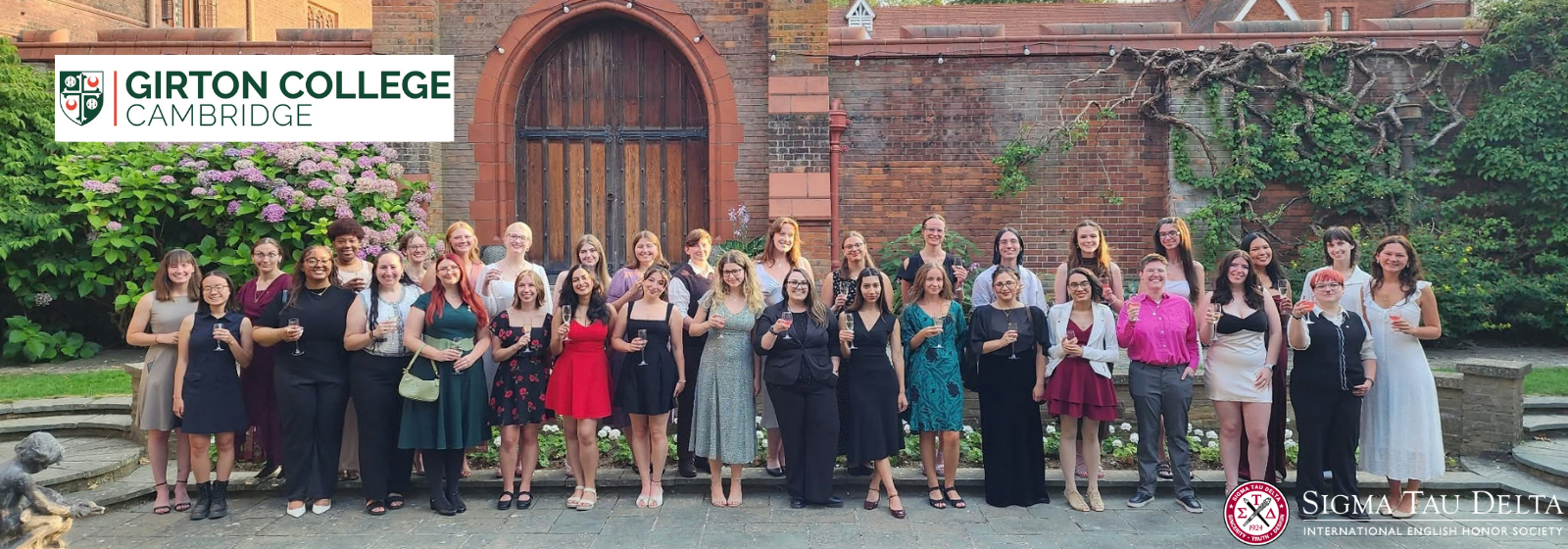
For most of my life, I had learned to dream with a sense of distance.
There were places I admired, opportunities I hoped for, and rooms I imagined myself entering someday—but “someday” always felt so far away. Cambridge was one of those dreams. I knew its libraries through photographs, its writers through their words, and its history through pages I had turned thousands of miles away. I never imagined that one day I would be walking through those same halls, holding my own place in a story I had only ever read from afar.
So when I was accepted into the Cambridge Undergraduate Summer Program at Girton College, I didn’t quite know how to believe it. For one week, the place I had only ever known through pages would become part of my own story.
From the moment I stepped onto the grounds of Girton and saw the welcome card waiting on the floor stating, “We are glad you are here,” something shifted inside me. It was a small gesture, but it made me believe I belonged equally in the spaces I had once thought were not made for me.
For the first time, I wasn’t dreaming about Cambridge. I was walking through it.
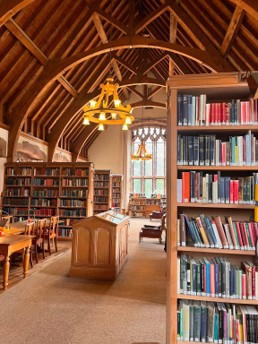
Perhaps nowhere did that surreal feeling become more real than in the libraries. I have always believed that libraries are more than rooms filled with books. They are places where generations leave pieces of themselves behind. Walking through Cambridge’s libraries felt almost like walking through the pages I had spent years reading. Surrounded by centuries-old books, manuscripts, and shelves that seemed to stretch endlessly, I felt both impossibly small and incredibly lucky. Somewhere between those shelves, I realized the books that had shaped me had come from worlds just like this one. And now, for a brief moment, I had become part of that world too.
One of the moments I know I will carry with me forever was standing in the very room where Virginia Woolf delivered the lecture that would later become “A Room of One’s Own.” There was something surreal about standing where her words had once filled the room. Woolf had spoken about women, literature, independence, and the spaces women need to create. Decades later, I was sitting in that same room as a woman studying literature and searching for my own voice. For a moment, the distance between her world and mine felt remarkably small.
But Cambridge did not simply allow me to admire literature. It challenged me to think differently about it. My classes in prose and poetry pushed me far beyond simply finding meaning in a text. The academic rigor forced me to question my own interpretations, challenge beliefs I had, and listen to perspectives that were different from my own. Close reading became an exercise in questioning how I arrived at that meaning in the first place. Every discussion pushed me to look again, listen more carefully, and be willing to change my mind. I left the classroom not always with answers, but with better questions.
And while Cambridge was breathtaking, the people made the experience unforgettable. I arrived knowing almost no one and left with friendships, conversations, laughter, and memories I know will stay with me forever. Meeting students from different universities, countries, and backgrounds reminded me that literature has a remarkable way of making strangers feel familiar. We may have arrived from different corners of the world, but for that week, we shared the same classrooms, the same walks, the same late-night conversations, and the same love for words. We came together because we loved words, but somewhere along the way, we became part of each other’s stories.
When I returned home, Cambridge was no longer just a place in a book.
It had become a chapter in mine.
I thought I was going to Cambridge to live a dream for a week. Instead, I came home with something much bigger: the courage to dream beyond it. I began to wonder what other doors I had mistaken for walls, what other places I had convinced myself were too far away, and what might happen if I simply allowed myself to imagine them.
Sigma Tau Delta gave me the opportunity to visit Cambridge.
But Cambridge gave me permission to dream bigger.
And perhaps that is the greatest gift I brought home.

Pratistha Ghimire
Cambridge Undergraduate Summer Program Participant, 2026
Chi Zeta Chapter
Caldwell University, Caldwell, NJ
Sigma Tau Delta–Cambridge Undergraduate Summer Program
Spend a week immersed in the world of English literature at one of the most prestigious universities in the world. The Sigma Tau Delta–Cambridge Undergraduate Summer Program offers students an unforgettable chance to live, study, and explore at historic Girton College, at the University of Cambridge.
This is a rare opportunity to walk the same paths as generations of scholars, poets, and thinkers who shaped the literary tradition. You’ll take part in two courses designed especially for Sigma Tau Delta and taught by distinguished Cambridge faculty, experience the vibrant social and cultural life of the city, and live the true Cambridge college experience. From punting on the River Cam to attending a centuries-old Formal Hall, every moment of this week combines academic excellence with authentic Cambridge traditions.
Through close reading, critical discussion, and essay writing, you’ll sharpen your analytical skills and deepen your understanding of English literature in ways that will benefit you long after the program ends. With personalized instruction in small seminars, expert faculty feedback, and access to Cambridge’s unparalleled academic environment, this program will equip you with the tools to think more deeply, write more persuasively, and approach literature with fresh insights.
Application Process
Applications are open until November 2, 2026, at 11:59 p.m. (CT).
Undergraduate Sigma Tau Delta members are asked to complete a short application form to participate in the Sigma Tau Delta–Cambridge Undergraduate Summer Program 2027.
The application process includes the following questions, which Sigma Tau Delta members must respond to:
- Why are you interested in participating in the Sigma Tau Delta–Cambridge Summer Program? (max. 200 words)
- How do you expect this experience will enhance your academic and professional growth? (max. 200 words)
- What unique perspectives or experiences have you gained as a member of Sigma Tau Delta that will positively impact you on the Sigma Tau Delta–Cambridge Summer Program? (max. 200 words)
Sigma Tau Delta
Sigma Tau Delta, International English Honor Society, was founded in 1924 at Dakota Wesleyan University. The Society strives to
- Confer distinction for high achievement in English language and literature in undergraduate, graduate, and professional studies;
- Provide, through its local chapters, cultural stimulation on college campuses and promote interest in literature and the English language in surrounding communities;
- Foster all aspects of the discipline of English, including literature, language, and writing;
- Promote exemplary character and good fellowship among its members;
- Exhibit high standards of academic excellence; and
- Serve society by fostering literacy.
With over 900 active chapters located in the United States and abroad, there are more than 1,000 Faculty Advisors, and approximately 9,000 members inducted annually.
Sigma Tau Delta also recognizes the accomplishments of professional writers who have contributed to the fields of language and literature.

