

The life of a chapter comes from the events and activities its members engage in together. The number of fun, educational, and rewarding activities a chapter may conduct is nearly endless. The following sections provide advice and resources for developing your chapter’s unique calendar of activities and events.
Campus Events
Field Trips
Fundraising
Service
Writing and Publishing
Campus Events
Campus events are intrinsic to the life of any chapter. Whether serious or silly, targeted at the chapter, the department, or the whole campus, these events can provide opportunities for fun and fellowship, promotion and recruitment, fundraising, service, and more. The possibilities for events are nearly endless, and the most interesting and successful events often combine complementary themes, but most fit into one or more of these categories. Suggestions for successful involvement and implementation follow.
Academic
Academic events include workshops, lectures, panel discussions, Q & A sessions, and other activities intended to educate the audience about a particular topic. Popular topics include graduate school, job opportunities for English majors, writing, editing, publishing, teaching, and standardized test preparation.
Literary
Literary events include open mic nights, poetry slams, marathon readings, author readings/book signings, performances of literary adaptations, and other activities that celebrate the written word, language development (both oral and written), and literature in translation.
Social
Fellowship and professional networking are among the primary aims of Sigma Tau Delta, making social gatherings a vital part of chapter life. Whether it’s a pool party or a quiet tea with faculty, getting together in informal social settings can strengthen relationships among chapter members and alleviate some of the stress of being an honors student.
Competitions
Friendly competition can be an excellent way to excite people about a topic, and competitions are also a great way to entice non-members to participate. Whether it’s a casual Scrabble tournament or a formal writing contest for high school students, hosting a competition is a fun way to promote the chapter, provide a service to the community, and celebrate literacy.
Holidays/Special Occasions

Holidays provide convenient, fun, ready-made themes for events. Yet any type of event can be adapted to fit a holiday theme, such as a love poetry contest at Valentine’s Day, a panel discussion on censorship during Banned Books Week, or a social gathering to celebrate Shakespeare’s birthday.
Formal Ceremonies
While service, fellowship, and fun are all vital to chapter life, Sigma Tau Delta’s primary mission is to recognize achievement and excellence, and from time to time that requires pomp and circumstance. From new member induction to graduating senior recognition, ceremonies and other formal events are the best way to mark important milestones in a chapter’s year.
Suggestions for Successful Events

- Be certain to keep the Advisor well-informed about the plans for any event.
- Make sure everyone from the chapter is invited to attend.
- Consider extending specific invitations to faculty and administration, including for fun events. Their attendance can enrich the occasion, and even if they don’t attend, such invitations will help raise the profile of your group on campus.
- ADVERTISE, ADVERTISE, ADVERTISE! On campus use flyers, posters, and email blasts. If the event is open to the community, look into whether local newspapers and radio stations have event calendars. To attract people from other schools, let the Regent and Student Representative know what the chapter is doing so they can promote it throughout the region. Don’t forget to take advantage of social media too!
- Be sure any speakers you select are comfortable with, and well-informed about, the topic. Let them know if the program format will include Q & A and what your expectations are for their presentation. Provide an approximate length of time you’re expecting of them. And let them know if they are alone on the program of if others will be presenting.
- Inform presenters about the overall flow of the program and when they will be speaking during that time. Provide them with contact information in case they have questions or concerns.
- When using an off-campus site for an event, secure full permission to use all the necessary facilities. On campus, check to see if reservations are needed.
- Choose a room that appropriate for and conducive to the activity. Does it have tables for workshopping? Is there a lectern? A/V equipment for a PowerPoint presentation? Are there noise considerations? Will guests be able to find nearby parking?
- Set up enough chairs in advance so there will be no interruptions during the event.
- Provide refreshments during or after your activity. Free food and beverages help attract students and provide a good opportunity for socializing.
Field Trips
Traveling off campus can be an exciting and enriching activity for chapters. Whether the destination is downtown or out of state, field trips can be wonderful bonding opportunities for members, and great ways to network with other chapters.
Annual Convention
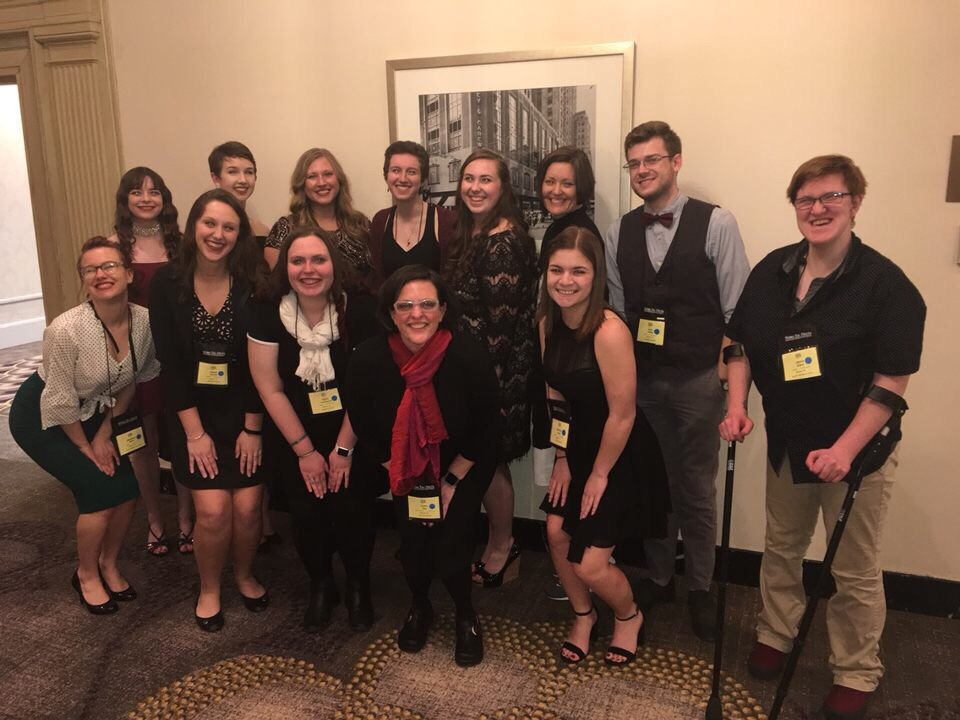
The annual Sigma Tau Delta convention is the ultimate field trip destination for any chapter. Sending members to the convention not only brings prestige to a chapter, it connects the chapter to the larger organization. Opportunities abound to meet Society leaders and Sigma Tau Deltans from around the world, to learn about what other chapters are doing, and to experience excellent presentations and workshops by students, faculty, alumni, and well-known authors.
Regional Events
In addition to the annual convention in the spring, there are often a number of regional Sigma Tau Delta events throughout the year. Some are official regional events sponsored by the Region’s elected representatives, others are conferences sponsored by local chapters and are open to members from other schools. Regardless of who hosts them, these smaller events provide chapters with a great way to network with other chapters in the area and to gain conference presentation experience in a low-pressure setting. Like the annual convention, regional events provide a vital link to the larger Society.
For a list of upcoming regional events and information about hosting an event in your area, visit Sigma Tau Delta’s Regional Events webpage.
Other Academic Conferences
Academic conferences not sponsored by Sigma Tau Delta can also be excellent field trip opportunities for chapters. Presenting at smaller conferences is great practice for students who plan to go on to graduate school. Attending larger conferences such as MLA can give students a better idea of what graduate and professional conferences are like. And hearing those excellent papers and speakers can inspire writers, energize chapters, and provide a look at some of the in-depth areas of our discipline.
Festivals, Performances, and Points of Interest
Visiting literary festivals, theatrical presentations, museums, homes of famous authors, and other places of interest that have a literary tie in can be fun and informative field trip experiences. There are myriad possibilities for interesting and educational destinations. Check the local paper, Chamber of Commerce websites, and travel guides for opportunities in your area.
Team Building Exercises
Not all field trips need to be purely academic in nature. Bonding and team building among chapter members, particularly officers and Advisors, are also important aspects of chapter life. Leaders who know each other well and enjoy spending time together tend to work more cohesively and make meetings and chapter events more enjoyable. Whether it’s a game of paintball or a trip to a tearoom, nearly any field trip can serve as a chance to work together as a team and to socialize outside of the school environment.
Suggestions for Successful Field Trips
Field trips are a worthwhile aspect of chapter life, but they do come with challenges such as arranging transportation, ensuring the safety of all members, and adhering to school rules about off-campus activities.
- First and foremost, check the rules for your campus regarding student travel. Some schools require chaperones and expect students to adhere to codes of conduct. Some schools only have these rules for group outings; others may extend them even to students traveling alone. Understanding and adhering to the rules is vital to maintaining trust and support from the administration
- Make a plan. Study schedules of events, lists of exhibits, maps of the area, etc., ahead of time as a group. Identify activities that are most important to people and try to come up with a plan to ensure everyone gets as much out of the experience as possible.
- Establish a budget ahead of time. Make sure to include incidental expenses such as gas, parking fees, and snacks. Ensure that students know what will be provided with chapter funds and what they will be expected to provide for themselves.
- Explore ways to keep costs down, such as carpooling and bringing food from home instead of eating out. For longer trips and larger groups, traveling in a personal or rental vehicle and sharing costs is often cheaper for a group than purchasing plane or train tickets. Look into whether school vehicles may be an option.
- Ensure that the Advisor or trip leader has emergency contact information for everyone on the trip, as well as any necessary information about medical conditions or other relevant health and safety concerns.
- Ensure that school administrators have a copy of the travel plan and itinerary and know when the group is expected back. They should also have contact information for the destination location and for the trip leader.
- Discuss ahead of time what individuals should do if they accidentally become separated from the group. Set clear expectations for whether or not individuals will be allowed to explore on their own or in small groups and have a plan for what people should do if they get lost or injured while not with the trip leader.
- Consider bringing a diverse group. Often chapters will focus primarily on travel opportunities for seniors and officers but bringing along younger members and even prospective members is a great way to enthuse future chapter leaders. Groups with a variety of perspectives and backgrounds may also have a more enriching, well-rounded experience.

Fundraising
Fundraising is a necessary activity for any Sigma Tau Delta chapter. Without money, chapter activities are limited. There are many different ways to raise funds, and successful chapters generally try several different approaches each year.
Getting Started
How a chapter solicits financial support influences the image of Sigma Tau Delta on campus. Fundraising efforts need to be well organized, transparent, and easily justified, or they can damage a chapter’s campus reputation and undermine getting future support.
- Establish specific, realistic fundraising goals for each project or activity. Chapters with multiple and/or ambitious goals may need to prioritize in the event some goals are not met.
- Create a clear plan of action for each goal.
- Set target dates by which money is needed.
- List possible funding sources and projected amounts. Make estimates conservative and have a fallback plan in case funders offer less than the requested amounts.
- Assign individual chapter members specific tasks. Make sure that members are aware of their responsibilities and that all members are contributing in some way.
- Maintain accurate records of the income and expenses associated with each fundraising effort, and periodically assess the effectiveness of each approach.
- Track progress and celebrate milestones to keep members motivated.
- Stay in contact with individuals and organizations that have made large or repeated donations, and not just to ask for more money. Good items to send include:
- Formal thank-you cards
- Periodic progress reports
- Evidence of how their contribution is having a direct impact, such as pictures and testimonials
- Chapter newsletter and/or calendar of events
- Invitations to induction ceremony or other formal events
Chapter Dues
Chapters may require local dues from members, either on a one-time basis at the time of induction or on a yearly or per-semester basis. Local chapter dues are not to be confused with the one-time, lifetime induction fee for new members, which must be submitted to the Central Office. Chapters keep local dues in their chapter treasury to pay for administrative costs and chapter activities.
- Collecting local dues can help ensure that members are committed to active participation because they have “skin in the game,” but dues can also be a barrier to entry.
- Many chapters waive local dues for members with demonstrated financial need, and some even maintain a scholarship fund for the international induction fee.
School Funds
Most chapters receive a portion of their funds directly from their school. School-based funding sources tend to favor projects that benefit students directly, projects that bring prestige and positive media attention to the school, and projects where chapters partner with other campus groups or community organizations.
- Explore all avenues for funding. The English department, college, student government association, honors programs, women’s and minority studies programs, and alumni association may have funds set aside for student activities. Some schools also have special foundations to fund certain types of activities such as service or community building.
- Ask members of other on-campus honor societies about funding sources they have found and used.
- Prepare all applications or requests for funds carefully. Provide as much documentation as possible.
- Demonstrate how the money will benefit students and/or the school.
- Outline the efforts of members and other sources of funding to demonstrate that this request is part of a larger, comprehensive fundraising plan.
Sponsors and Partnerships
Many chapters are able to find local businesses and community organizations willing to sponsor activities and events, or to partner with chapters to assist in their fundraising efforts.
- Local businesses are often willing to sponsor events and/or publications in exchange for acknowledgement or ad space in the event program.
- While some businesses will donate money, others prefer to contribute goods, services, or store credit. Consider soliciting any of the following:
- Food or goods that can be sold to raise funds or used as refreshments at events
- Items to raffle or incentive prizes for contests and events
- Giveaways for event attendees or donor gifts
- Supplies for chapter events or projects
- Coupons or discount codes that can be given to donors or attendees
- Many local businesses have established partnership programs. Explore the possibilities in your area, including:
- Organization nights where a portion of all proceeds on a particular night could be donated to your chapter
- Work opportunities where members can serve customers in exchange for tips and/or a percentage of the proceeds
- Club programs where customers mention your organization at the time of purchase and the store donates a percentage of the purchase to your group
- Opportunities to place a collection jar or items for sale near the register
Grants
There are a number of grants available to support chapter activities, particularly those with an educational or service focus. Sigma Tau Delta, for example, offers both Chapter Service Project Grants and Service Awards valued at up to $500 each.
Other potential funding sources include school and alumni foundations, community organizations, Arts and Humanities councils, educational foundations, and civic groups.
- Start by contacting the English department chair or another knowledgeable person to see if the school offers any grant writing support or has a grant writer on staff who may be able to help or at least to offer guidance and suggestions.
- Next speak with a school librarian. Many libraries subscribe to databases of grant opportunities and other valuable search tools. The library also will likely carry books on applying for grants.
- Contact the student government organization on campus to determine if it offers any assistance applying for grants. Also ask if the organization knows of any local grants that other student groups have successfully applied for in the past.
- Read grant descriptions and application instructions closely, and before applying, make sure the project fits the organization’s mission and grant objectives.
- If there are any questions or doubts about whether a particular project is eligible for a grant, or about the application process, contact the funding source to ask for clarification. These organizations want to give away money to deserving projects, and they generally are very helpful.
Sales and Donation Drives
One of the most popular ways for chapters to raise money is through sales and donation drives. From books and brownies to custom Valentine’s poems and car washes, the list of possible goods and services is endless.
- Instead of setting a price, consider listing a suggested donation. People almost never take something without making a donation, and many will donate more than the “price.”
- Don’t be afraid to charge a little more. People understand this is a fundraiser.
- Be creative. Cookies and used books are nice, but people can get them anywhere. Funny shirts, creative bookmarks, and other original items can be more of a draw.
- Look beyond the basic table in the English department lobby. Consider selling items:
- In a high traffic area such as the cafeteria or outside of a busy store
- At a large event such as a football game or student conference
- In restaurants, bookstores, and other local businesses
- On the chapter’s website
- At Chapter Merchandise Sales at the annual convention
Double Good

Sigma Tau Delta partners with Double Good, a digital fundraising platform for nonprofit and community organizations that allows students to sell popcorn to their friends and family across the nation and raise funds for their chapter’s community service projects.
All you need to do is decide what project you want to raise funds for, register on the Double Good website, and ask your students to sell delicious popcorn. 50% of all sales income is returned to Sigma Tau Delta chapters for use on their chosen project. There are no fees, and no cash exchanges hands: everything is digital. Sigma Tau Delta receives no money from chapter fundraisers.
Service
Service to campus and community can be one of the most rewarding parts of chapter life. Service can take many forms, and Sigma Tau Delta chapters around the world participate in a broad spectrum of activities benefiting diverse communities and causes. The following sections provide some tips for finding the best service opportunity for a chapter, and for ensuring the project is a success.
Raising Funds
While raising money is by no means the only way to be of service, many service projects will include fundraising aspects. Whether the goal is to raise money to donate directly to an organization or cause, or to pay for supplies for a more involved project, securing necessary funds is an important first step for many service projects.
- Apply for a Chapter Service Project Grant to help pay the costs of a service project.
- Apply for a Service Award to increase the amount of a charitable donation.
- Apply for an Outstanding Chapter Award to refill the chapter’s coffers for next year.
- Chapters may apply for any or all of these awards before, during, or after the project takes place.
- While Sigma Tau Delta considers all service to be worthwhile, award judges tend to favor projects that further the Society’s mission.
- Chapter Advisors, members, and their families should check with their employers to see if matching donations are available.
Volunteerism
Time can be more valuable than money, and most service projects will necessitate that members donate at least a little time. There are many ways to volunteer, from reading to children to building houses. Chapters should consider the following when deciding where to direct their efforts:
- How much time do members have at their disposal? College students tend to have more time than money to donate, but they are still busy. Don’t scare them off with heavy commitments.
- When do members have free time? Would a major event on a single day be manageable, or would an ongoing project requiring a few hours every week or month work better?
- What skills do members possess? Take an honest assessment and then discuss how various skills could be used to help others.
- How much physical and intellectual effort are members willing to put into a project? Do they mind getting their hands dirty? Do they want to organize and run an event, or would they rather just show up and be told what to do?
- Are there any organizations or communities that members have a particular interest in working with? Are there general causes members wish to champion? Are there any organizations or causes that the wider campus community supports?
- Narrow it down to three or four options. Contact related organizations to ask what their most pressing needs are. Some may not actually need volunteers at the moment, and others may have restrictions that would make working with them difficult or impossible. Always find out the situation “on the ground” before making a final decision.
Donation Drives
Another popular form of service for chapters is collecting donated items. Canned foods in the fall, coats at winter time, school supplies in the spring, care packages for soldiers on Memorial Day, books year-round; Sigma Tau Delta chapters have collected them all. Drives like these tend to be popular because progress is tangible and their impact is easy to see and understand.
- Storage space is a crucial and often overlooked aspect of any drive. A locked storage area that is conveniently located and easily accessed by members, but also secure, is essential to any drives lasting longer than a day.
- Make donating as easy as possible. Place collection bins in high traffic areas and, importantly, empty them frequently. Offer to pick up large donations. Set up a table and ask for donations outside book or grocery stores. (Get permission from the owner first.)
- Involve the whole campus with some friendly competition. Offer a prize to the department that donates the most books. Hold a canned food sculpture contest.
- Involve the larger community by asking businesses and community centers to help advertise the drive and place collection bins in their entryways.
Activism and Awareness
A further area of service popular with chapters is raising awareness, through campus activism, of issues and causes. Chapters routinely participate in marches, enter floats in parades, hold public readings, host lectures and workshops, create visual displays, and even host large campus events to raise awareness of issues and to educate the public.
- Start by contacting established organizations already working to raise awareness about a chosen issue. Ask if they can provide advice or supplies, and request information about participating in events they sponsor.
- Find out if there are other groups on campus, or other chapters in your area, that already promote this cause. If so, approach them about forming a partnership.
- Identify holidays or other special occasions that might provide an opportunity to hold an awareness event.
Resources and Suggestions
- Combine approaches for maximum impact. Host a campus event and make donating books or canned goods the price of admission. Volunteer to read to kids and raise money to donate books to their classroom library. Hold a high school writing contest where students must attempt to raise awareness of an issue and display the winning entries.
- Join the Sigma Tau Delta Discord Server to connect with other members and brainstorm ideas, ask for advice, and form partnerships.
- Don’t forget to document and publicize chapter service. Advertising success raises the chapter’s profile on campus and makes it easier to get funding and participation in the future.
- Take lots of pictures at events and share them on social media.
- Ask the school paper to cover the event.
- Work with the school’s Public Relations office to draft a press release and send it to local media.
- Notify your school’s administration and alumni association.
- Provide your department administration with a full report.
- Submit a short article highlighting your most noteworthy activity to the Sigma Tau Delta blog.
Writing and Publishing
Not surprisingly, writing and publishing opportunities are very important to many Sigma Tau Delta members. Chapters produce publications ranging from informal newsletters to sophisticated academic journals, and many chapters also help members prepare their work for submission to conferences and publications.
Conference and Journal Submissions
Most undergraduate students are not prepared for or comfortable with the idea of presenting a paper or submitting their work to a publication but doing so is a very good way for students to prepare for graduate school or professional writing careers. It also looks good on a resume. To encourage students to take advantage of writing and publishing opportunities, many chapters offer scheduled workshops, peer editing sessions, and practice readings to bolster student confidence and to ensure their work is as polished as possible before submission. Some Chapter Advisors require members to attend such meetings and to get their work approved before they may submit to a Sigma Tau Delta journal or the convention.
WORDY by Nature Submissions
WORDY by Nature is the official blog of Sigma Tau Delta. All members and Advisors are encouraged to subscribe to the blog for information and advice about chapter life. In addition, members and Advisors are invited to submit articles about interesting chapter activities and other appropriate topics for publication on the blog.
Chapter Newsletters, Websites, and Social Media
Many chapters publish newsletters, websites, social media accounts, and blogs intended to communicate with other chapter members, administration, and parents. Such publications help keep members informed and connected, and provide an excellent, low-pressure way for members to practice writing for these various formats.
Chapter Journals and Regional Publications
Some chapters and/or schools publish literary journals showcasing work from their campus or region. Such journals not only give members an opportunity to be published, they also can provide experience with editing and publication. A departmental or campus journal can help gain support for and awareness of the chapter and provide a voice for student members. A regional journal can make the chapter more visible to the larger Society and bring prestige to the school.
Publications that accept submissions from other Sigma Tau Delta chapters can be listed in the Regional Publications section of the Society website. Contact the Central Office to inquire about listing your publication. Some publications may be eligible for regional funding. (Contact your Regent for more information.)
Literary arts journals produced or sponsored by chapters may also be eligible for Sigma Tau Delta’s Outstanding Literary Arts Journal Award.
Other Writing Activities
There are a wide range of other writing or publishing activities in which chapters can engage, such as hosting writing workshops, recording and publishing oral histories, or inviting experts to speak about careers in publishing.
Suggestions for Successful Writing and Publication Activities
- Make sure you have enough committed, active members to carry out the necessary work. These projects require a good deal of planning, cooperation, and time.
- Develop a plan and timeline for project implementation, including target dates and persons responsible for completing each task.
- Work closely with faculty and department staff. Providing writing and publishing opportunities may require readers, judges, and/or editors.
- Estimate project expenses. Obtain price quotes from local printers as well as campus sources.
- Prepare submission guidelines carefully, allowing sufficient time to advertise the call for papers and to obtain a sufficient number of responses.
- Ensure that your project is consistent with campus rules and standards for publishing.

