

On February 19, 2026, a rainy Thursday night, Virginia State University’s Alpha Delta Upsilon Chapter of Sigma Tau Delta met for our Common Reader Event at Resist Booksellers, the Black independent bookstore in Petersburg, VA. We dove into the 2026 Common Reader, Jesmyn Ward’s Salvage the Bones, and the vibe was exactly what we needed for a charged two-hour conversation. Sigma Tau Delta members pulled the chairs into a big circle to talk—a real conversation among friends that simply happen to be English majors. We then delved into the storm of Ward’s novel, discussing Black masculinity, China’s and Eshe’s parallels, and control over one’s destiny.
We spent time reading between the lines, starting with the complicated family dynamics for which the storm was a metaphor. We talked about the contrast between Randall and Daddy: while Randall tries to build a future through basketball, Daddy is laser-focused on the immediate survival of the house. It made us wonder which kind of preparation matters more when a catastrophe hits. We also considered that their priorities may have been generational. Then there’s Esch and her brothers; as the only girl in a high-energy, masculine world, she’s navigating her own internal storm—her love for Manny and her pregnancy—while trying to keep up with them.
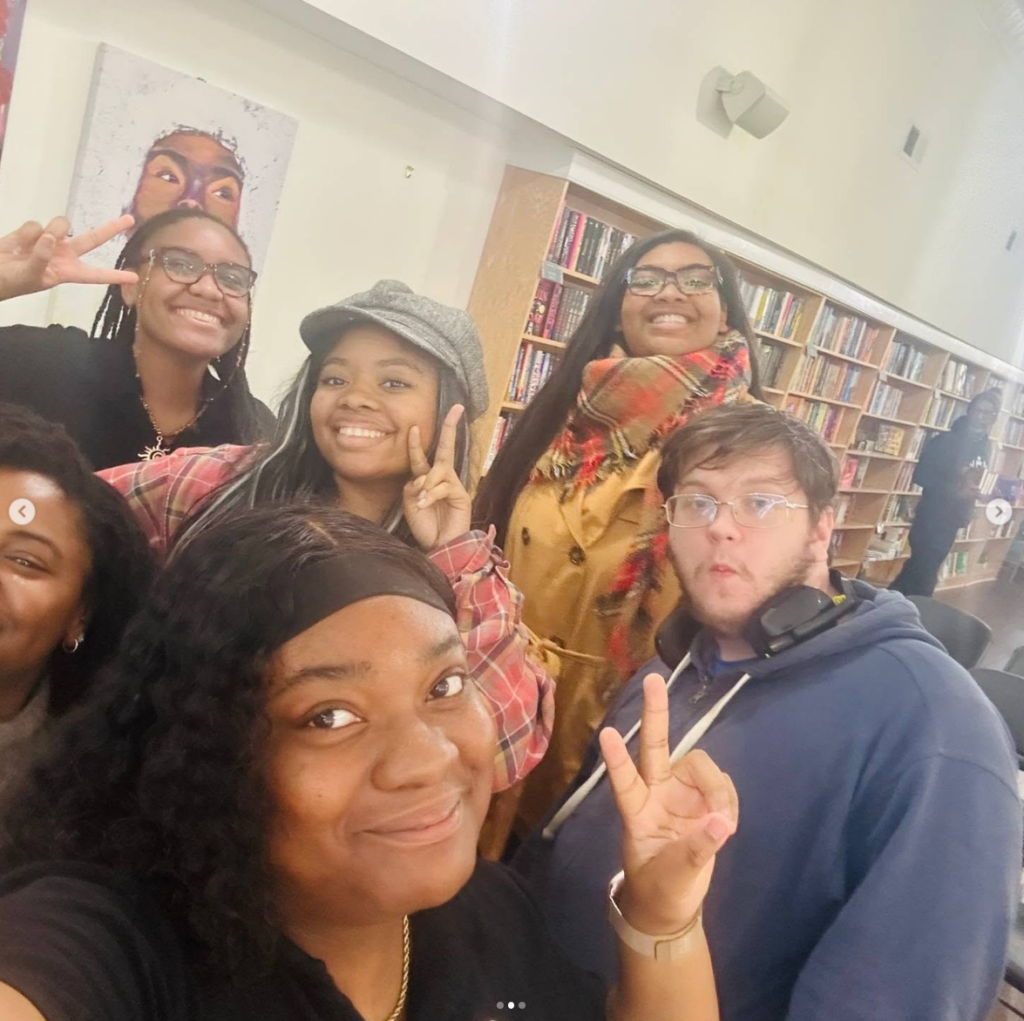
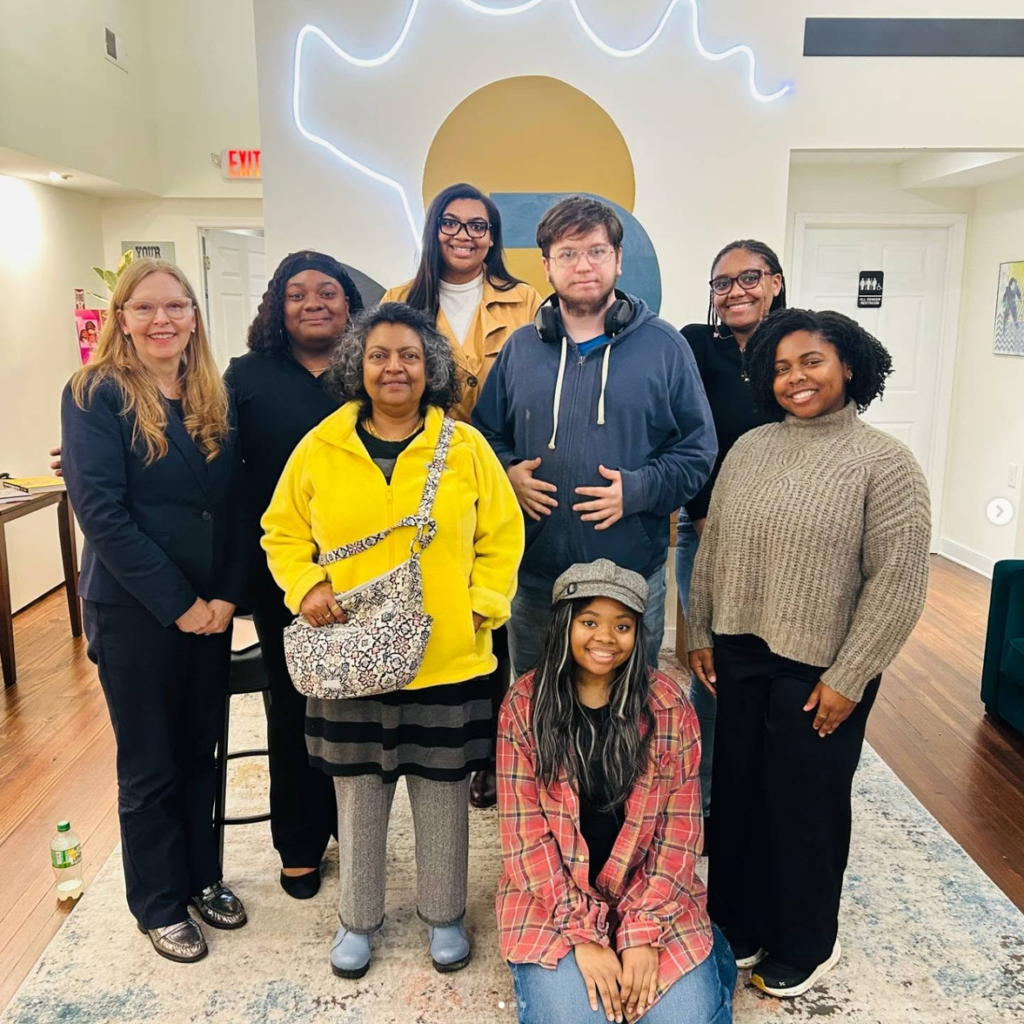
The energy shifted when we discussed China’s and Kilo’s fighting and the violence of motherhood. We had a deep talk about how birth, by its very nature, is a kind of violence. We matched the story to real life, acknowledging that motherhood isn’t always some soft, dainty thing—it’s visceral and requires a warrior mentality. Further discussion ensued regarding Skeetah’s exploitation of China, and Manny and other young men’s sexual exploitation of Esch. The pregnancy parallel between China and Esch led us to conclude that when a system is never meant to spare a woman, those maternal bonds are constrained and hence the Medea parallel in the novel. Manny’s rejection of Esch resonated with many readers in our group regarding the vulnerability of young women in isolated communities with no social safety nets.
Moving into societal disparities, we asked the hard question of who is protected? The Black family scavenging at the white people’s house shows that protection is clearly tied to wealth. Furthermore, we realized that survival in this book is communal; no one makes it out alone. The siblings survived the storm because they salvaged each other. Big Henry demonstrates this point when he responds to Esch when she claims her baby has no father: “This baby got plenty daddies” (255). For Esch, Edith Hamilton’s Mythology was her mental shelter, giving her suffering a grander purpose—making her feel like a hero of her own destiny.
Just as the characters sit around a fire in a circle to wait with Skeetah for China at the end of the novel, by the time we moved the chairs back, we left with a much deeper connection to the story and to each other.
Hannah Smith
Regents’ Common Reader Award Recipient
Alpha Delta Upsilon Chapter, President
Virginia State University, Petersburg, VA
2027 Common Reader
Angie Cruz’s novel How Not to Drown in a Glass of Water introduces us to Cara Romero, a Dominican woman in her mid-fifties, who is navigating job loss and personal hardships during the Great Recession of 2007 – 2009. Told through a series of government-mandated job counseling sessions, the novel unfolds as Cara recounts her life story with wit, resilience, and unfiltered honesty. Cruz makes good use of humor and oral storytelling traditions in an updated version of the epistolary novel with its intimate look into the protagonist’s life, while touching on themes of immigration, displacement, economic struggle, and the pursuit of dignity in an unforgiving system.
Published in 2022, Cruz’s novel received rave reviews, being named a New York Times Review of Books Notable Book and a New York Times Editor’s Choice, as well as being a Latino Book Awards Gold Medal winner, a finalist for the Neustadt International Prize for Literature, and longlisted for the Joyce Carol Oates prize, among other accolades.
Cruz’s novel showcases the capacity of literature to open a window for us onto the experience of others and help us relate to them, whether we share superficial similarities or not. Cara Romero will draw you into her effort to regain her footing in her work and personal lives, and her story’s meditation on survival, identity, and the strength found in community is both timeless and freshly relevant.
Regents’ Common Reader Awards
The Regents’ Common Reader Awards provide an opportunity for individual chapters to organize and host a local event or activity based on the common reader. Chapter members do not need to attend the convention to apply. Contact your Regent and you may receive $100 for your event or activity.
Application Guidelines
Organize and host a local event or activity based on this text and apply for award money after your event. Submit to your Regent via email the Regents Fund Request form as well as the following materials in a single PDF:
- A cover letter, signed by the Chapter Advisor (or sent from the Advisor’s email address), confirming that the activity or event took place
- A narrative, not to exceed 500 words, describing the activity or event
- A list of all participating persons or groups
- Pertinent supplemental materials (event program, flyers, website, social media posts, campus news story, etc.)
The Regents’ Common Reader Award is open to all chapters of Sigma Tau Delta. It is completely separate to convention submissions. The Regents hope this award will be a way for chapters in each region to share a convention-related experience even if they are not able to attend the convention. We hope it will encourage relative, text-based activities and events. And, lastly, we hope it will give space to reflect on the power of language both in our own lives and in the lives of others.
Sigma Tau Delta
Sigma Tau Delta, International English Honor Society, was founded in 1924 at Dakota Wesleyan University. The Society strives to
- Confer distinction for high achievement in English language and literature in undergraduate, graduate, and professional studies;
- Provide, through its local chapters, cultural stimulation on college campuses and promote interest in literature and the English language in surrounding communities;
- Foster all aspects of the discipline of English, including literature, language, and writing;
- Promote exemplary character and good fellowship among its members;
- Exhibit high standards of academic excellence; and
- Serve society by fostering literacy.
With over 900 active chapters located in the United States and abroad, there are more than 1,000 Faculty Advisors, and approximately 9,000 members inducted annually.
Sigma Tau Delta also recognizes the accomplishments of professional writers who have contributed to the fields of language and literature.

